






SiS GO Isotonic vs Beta Fuel comes down first to how much carbohydrate you want in each packet and how that fits your overall fuelling plan. The SNH listings describe GO Isotonic as supplying 22 g of carbohydrate per gel and Beta Fuel Gels as supplying 40 g. More carbohydrate per packet is not automatically better for every session or stomach.
If you are doing a short casual workout, you may need neither. For prolonged effort, practise timing, food and hydration before you rely on either gel in competition.
Quick choice: GO Isotonic offers a smaller carbohydrate portion in an isotonic formulation; Beta Fuel offers a more concentrated carbohydrate serving for a higher-intake plan. Both are fuel, not complete hydration solutions. Check the current flavour and serving label.
What is the difference between SiS GO Isotonic and Beta Fuel?
Both are portable carbohydrate sources used during exercise. The main practical difference in the SNH catalogue is the amount per sachet. GO Isotonic Energy Gels are listed with 22 g of carbohydrate per serving, while SiS Beta Fuel Gels are listed with 40 g. Beta Fuel's product description identifies a maltodextrin-and-fructose combination; the larger serving is designed for a planned higher carbohydrate intake in longer endurance efforts. Do not assume a higher dose will be comfortable if you have never tested it.
Compare the fuelling job
SiS GO Isotonic Energy Gels
Listed carbohydrate: 22 g per gel. A smaller portion that may be easier to fit into a flexible plan where other snacks or drinks also supply carbohydrate.
Practical question: Can you carry and take the number of sachets your longer session calls for?
SiS Beta Fuel Gels
Listed carbohydrate: 40 g per gel. A larger portion suited to deliberate higher-carbohydrate fuelling across prolonged exercise.
Practical question: Have you practised this amount and texture at training intensity?
These are product-listing figures, not a prescription for grams per hour. Check the actual packet, because formulations and flavours can change. A fuelling plan also has to account for carbohydrate in drinks, bars and meals, not just gels.
Does “isotonic” mean you can ignore water?
No. GO Isotonic refers to the gel formulation, not to an entire hydration plan. You still need to consider access to fluids, conditions and how much you sweat. On a humid Sri Lankan run or outdoor tournament day, the water you drink, opportunities to cool down and sodium from food or appropriate drinks are separate considerations. Do not confuse the word “isotonic” with “contains everything needed for sport”.
Beta Fuel is a carbohydrate gel too; do not assume the same directions apply to every gel. Read each packet's instructions and take water according to the product and your session. Our electrolytes guide
Which gel fits training, competition or a tournament?
Short activity
Water and ordinary meals may suffice. A gel should answer a genuine fuelling problem, not merely fill a pocket.
Long continuous effort
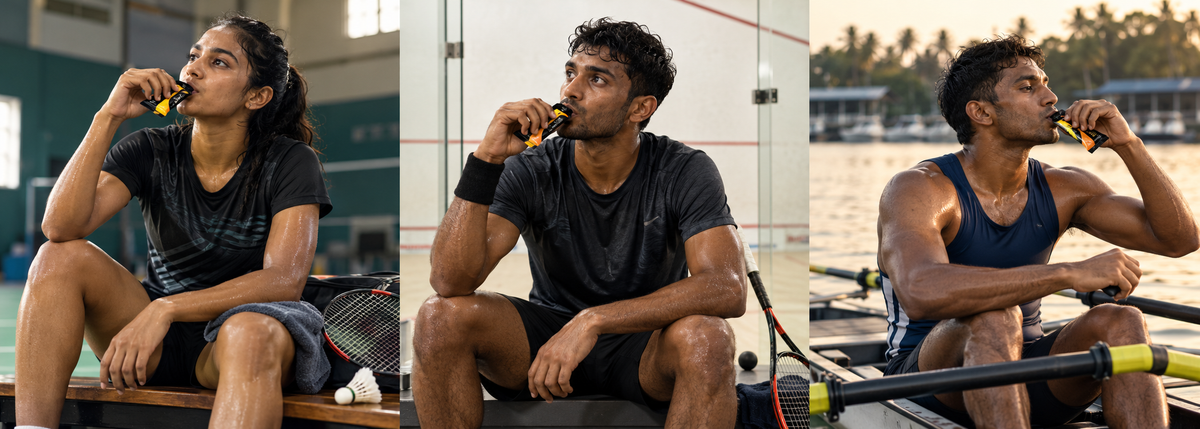
Running or rowing sessions may make portable carbohydrate useful. The larger Beta Fuel serving requires a practised plan.
Repeated games
Between racket-sport matches, familiar food may be easier. A gel can be practical if eating time is limited and you have tested it.
For training, choose the session that resembles your event. Try the gel at a realistic pace and with the water and other food you expect to have. Note stomach comfort, flavour, packaging and timing. If 40 g at once does not sit well, do not force it merely because the packet seems more efficient. If you need substantial carbohydrate over a long event, a smaller gel may still work as part of a broader plan.
For competition, repeat what has worked. A cricket match offers breaks and often more room for conventional food than a hard continuous run. Rugby has scheduled access and intense phases; match logistics matter. Padel and pickleball tournaments may compress multiple matches into a day, making between-match meals as important as in-match gels. There is no reason to copy a cycling gel schedule without accounting for your own sport.
Compare the current products
Use the current product pages to inspect flavours and directions. Neither gel is a guarantee of performance or a substitute for adequate food and fluids.


Three mistakes that cost more than choosing the wrong gel
Starting too late: Waiting until you feel empty is a poor way to test a new fuelling plan. Practise a schedule appropriate to the duration of your effort. Ignoring other food: A gel is a component, not breakfast, a recovery meal or an excuse to skip eating between tournament rounds. Changing everything on event day: New gel, new drink and a different breakfast at once make it hard to know what your gut tolerates.
If you are new to gels, start with our energy gels explainer. The planned sport guides cover cricket, rugby, padel and pickleball and badminton, squash and rowing; those links will be public after the drafts are published.
Comparison FAQs
Is Beta Fuel always better because it has more carbohydrate?
No. Match the portion to the session and your full fuelling plan. A larger serving is only useful if you need and tolerate it.
Can I take GO Isotonic without drinking water?
Follow the packet directions. Its isotonic formulation does not replace normal fluid planning, especially in heat.
Do I need either gel for a short match?
Not necessarily. Consider your total activity, previous meals and upcoming games; ordinary food may be enough.
Should I test Beta Fuel on race day?
No. Practise your intended serving, timing and hydration in comparable training first.
Are electrolyte tablets and energy gels interchangeable?
No. Gels supply carbohydrate; an electrolyte tablet primarily helps make a mineral-containing drink. Check labels for both.
Choose the amount you can use well
Start with the duration and intensity of your session. Then choose a carbohydrate portion you have practised, and build water, food and rest around it.
Explore GO Isotonic gelsGeneral adult sports nutrition guidance. If you have diabetes or a medical condition affecting fuelling or hydration, seek individual professional advice. Product details should be checked against current labels.



Leave a comment
This site is protected by hCaptcha and the hCaptcha Privacy Policy and Terms of Service apply.