





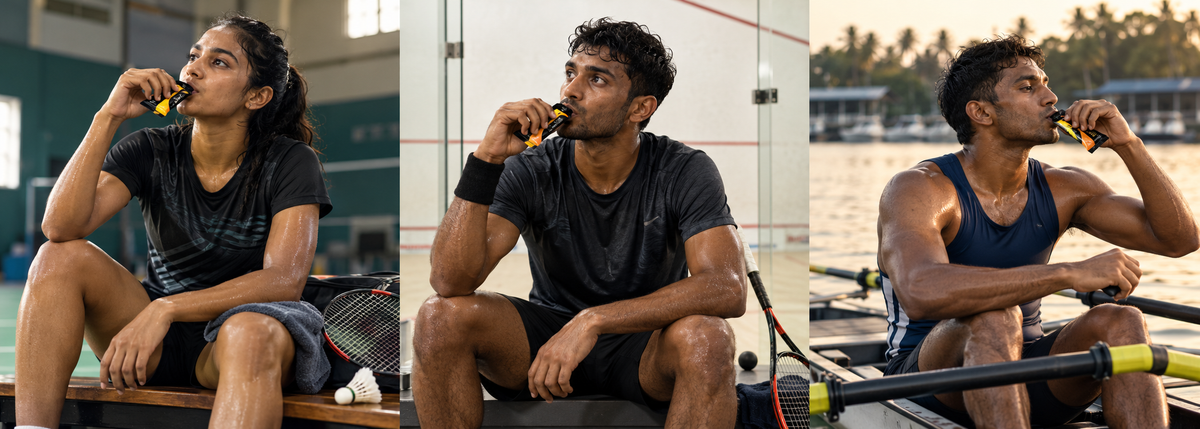
Energy gels for badminton, squash and rowing solve different problems. Badminton and squash players may face short, demanding matches followed by another round with little time to eat. Rowers may have long training sessions where taking food on the water is awkward. A gel offers portable carbohydrate, but for an ordinary short session after a meal it may add nothing useful.
Choose a fuelling strategy for the entire session or tournament, then practise where a gel, familiar snack and water fit. The point is not to turn every game or outing into a supplement schedule.
At a glance: For a brief game or easy row, start with meals and water. For repeated matches or prolonged demanding rowing, carbohydrate during the day may be helpful. A gel is one convenient option, not a substitute for eating and drinking.
Why these three sports do not share one gel schedule
Badminton's explosive lunges, jumps and directional changes are broken into rallies and games. Squash can sustain intense movement within a small enclosed court, with rallies and rapid recoveries that feel quite different from a relaxed hitting session. Rowing can range from a short hard piece to a long continuous outing or several sessions in a day. The timing and practicality of eating differ accordingly.
Duration and intensity both matter. A short hard bout may be well covered by food eaten beforehand, while a day of repeated bouts can make maintaining intake more difficult. A long row has fewer convenient places to stop and open packaging; a squash tournament may have access to food between matches but not much digestion time. Start with the event timetable rather than a generic “one gel per match” rule.
Badminton
Plan for repeated rounds and uncertain gaps. Food between matches may be easier than a gel during play.
Squash
Fast, physically demanding games can stack fatigue. Consider what you can tolerate before the next court call.
Rowing
Long sessions and limited access on the water may make portable fuel useful when safely practical.
Badminton: fuel the tournament, not every rally
An after-work social game after a normal meal probably does not require a gel. A tournament is another story: warm-up, several matches, waiting and travel can span much of the day. You may not know whether the next round begins soon or after a long delay. Pack familiar food for the larger gaps, and consider a tested gel only if a short turnaround makes a normal snack inconvenient.
Do not leave your entire nutrition plan to the venue canteen. A light snack you know you tolerate, access to drinking water and enough time to cool down will often matter more than which packet is in your bag. If the hall is hot or poorly ventilated, account for sweat even though play is indoors.
Squash: intense court time, short turnaround
Squash can feel relentlessly demanding when rallies are long and movement repeatedly changes direction. But that intensity alone does not mean a gel is needed for a single short match. A sensible pre-match meal and post-match food may cover it. Multiple competitive matches on the same day change the question: can you eat comfortably between them, and how much time is available to digest?
In a brief gap, a familiar carbohydrate option may be more practical than a heavy meal. A gel can fit if you have rehearsed it, but trying a new concentrated product just before another intense game risks an unpleasant surprise. Ask when the next match is expected and keep your water accessible off court.
Rowing: access is the constraint
For a short rowing workout, normal meals and water may suffice. During a long steady outing or a training block with multiple pieces, carbohydrate planning can become more relevant. Opening a gel while rowing may be inconvenient or unsafe depending on the boat, water conditions and crew instructions. Agree on appropriate breaks and a safe place to store food rather than improvising mid-stroke.
A pre-session meal gives you a foundation; a packed snack can work on shore or between sessions. If portable gels fit the water plan, test the packaging and stomach response in training. The demands of a regatta with heats and finals are different from those of a single outing: food and rest between races may be more important than trying to consume a gel on the water.
A practical training-to-event trial
Note warm-up, play or water time and the next chance for a meal. Pack food first, then identify whether a gel solves a real gap.
Try the intended product with your usual drinks. Check flavour, packaging, stomach comfort and safe access.
Bring what worked in training. Refill your bottle, eat between rounds and avoid making several changes at once.
GO Isotonic or Beta Fuel?
SNH lists SiS GO Isotonic Energy Gels with 22 g carbohydrate per sachet and SiS Beta Fuel Gels with 40 g. That difference matters most when planning a longer or higher-carbohydrate session. A bigger packet is not automatically more appropriate for a squash match or a short row. Include the carbohydrate from meals and drinks when planning a day, and follow current label directions.
For a direct breakdown, see SiS GO Isotonic versus Beta Fuel. For the basics of when any gel makes sense, start with our energy gels explainer.
Take the gel you have practised
Compare current packet labels and test one product at a time. Neither product replaces a meal, water or planning for heat.


Hydration is a separate decision
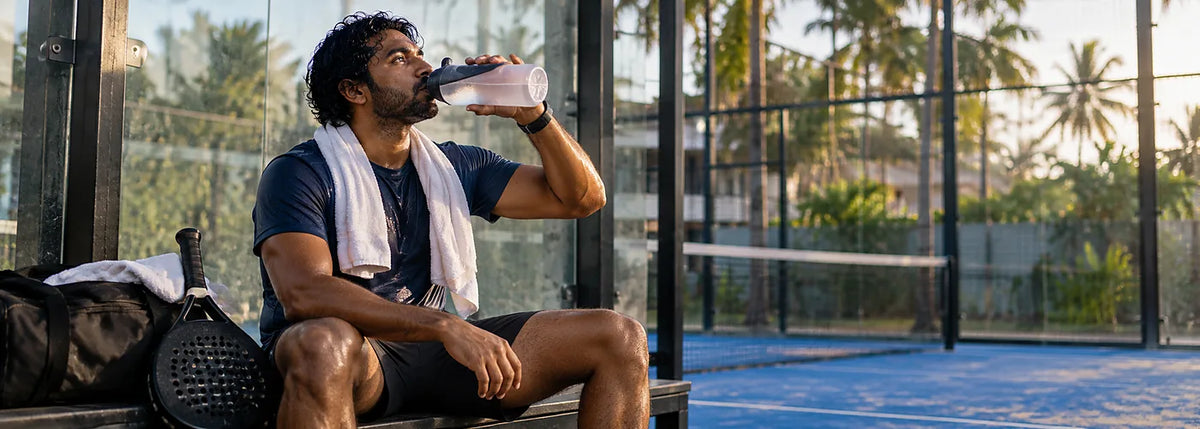
A gel provides carbohydrate, not a complete hydration strategy. Indoor badminton and squash halls can be hot; rowers may train in humid outdoor conditions with fewer convenient drinking points. Carry or position water appropriately and plan breaks. For prolonged sweaty exercise, sodium from food or a suitable drink may be relevant. Avoid assuming that a gel or electrolyte tablet alone covers both fuel and fluids.
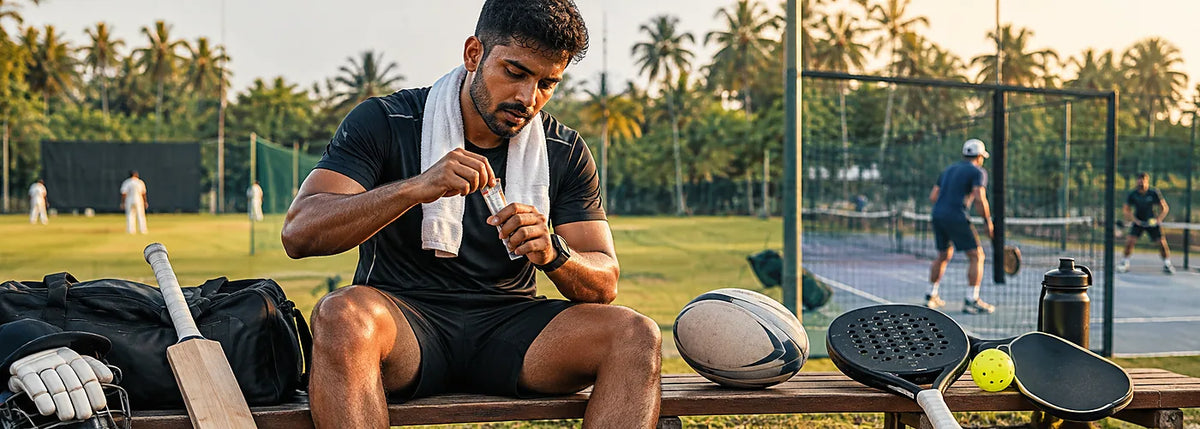
See when water alone may not be enough for the broader hydration question. For other stop-start match sports, our cricket, rugby, padel and pickleball guide addresses different fuelling windows.
Sport-specific FAQs
Do I need a gel for one badminton match?
Not automatically. A normal meal, accessible water and food afterwards may be enough.
Should I take a gel between squash matches?
It may be convenient when the gap is short, but familiar food can also work. Trial the timing and product before competition.
Is it safe to open a gel while rowing?
Only if the boat, conditions and crew plan allow safe access. Arrange breaks and storage in training rather than improvising.
Is Beta Fuel better for all three sports?
No. Its larger carbohydrate portion is useful only if the session warrants it and you tolerate it.
Can gels replace water during a hot tournament?
No. They are carbohydrate fuel; plan fluid, food and appropriate cooling separately.
Fuel around the real schedule
Plan meals and water first. Put a tested gel in your kit when the timing of court rounds or a longer row makes portable carbohydrate genuinely useful.
Explore SiS GO Isotonic Energy GelsGeneral adult sports nutrition guidance. If you have diabetes or a condition affecting fuelling or hydration, seek individual professional advice. Check current product labels.


Leave a comment
This site is protected by hCaptcha and the hCaptcha Privacy Policy and Terms of Service apply.