





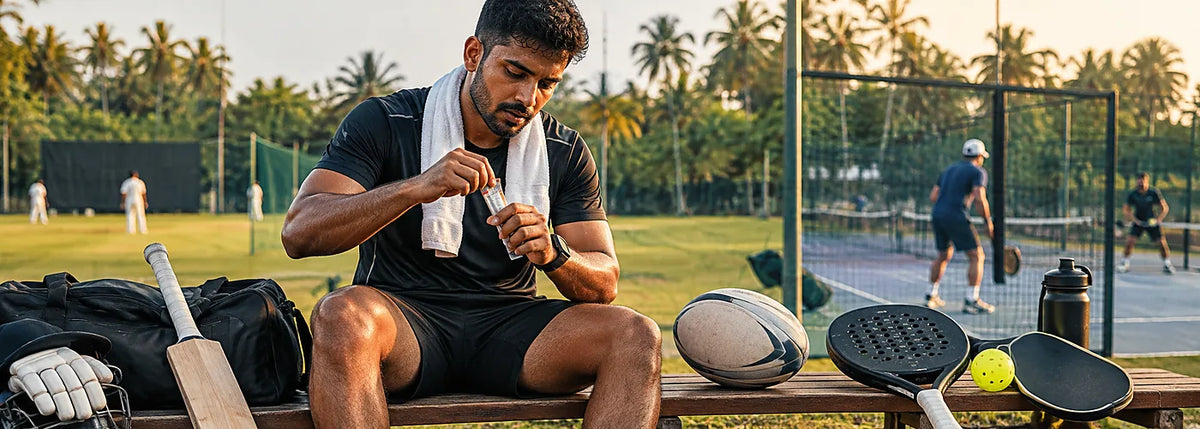
Energy gels for cricket, rugby, padel and pickleball are not one-size-fits-all. A gel is portable carbohydrate, useful when a long or demanding playing day calls for fuel and eating ordinary food is inconvenient. Cricket's extended schedule, rugby's hard phases and the repeated rounds of racket-sport tournaments each create different opportunities to eat.
If you have a normal meal before a short casual game, you may need no gel at all. Plan around the whole fixture, not the sports label on a packet.
The practical rule: Food first when there is time to eat. Use a gel only where it solves an access or timing problem, trial it in training, and plan fluids separately in Sri Lankan heat.
What can a gel do during stop-start sport?
Carbohydrate is a useful fuel for demanding exercise. Gels deliver it in a compact sachet. That convenience matters when you cannot sit down to eat, but it does not mean a gel improves every brief match. Match duration, intensity, your last meal and whether you have another game soon all affect the decision.
A short session after a proper meal may call for water and little else. A long tournament can turn several individually short matches into a day where food is hard to organise. In that case a familiar snack may be sufficient, or a gel might be convenient at a suitable break. Neither replaces a recovery meal.
Before
Eat a familiar meal or snack when time permits. A gel is not the default replacement for lunch.
During
Match carbohydrate to the full workload and the actual breaks when you can eat or drink.
Between games
Rehydrate, cool down and eat. For a fast turnaround, use food you already tolerate.
Cricket: a long day does not mean continuous running
A cricket fixture can keep a player at the ground for many hours, but workload differs substantially between batting, bowling, fielding and time off the field. The nutrition challenge is often maintaining normal eating and drinking across a long, hot schedule. Breaks and intervals may allow familiar food, making a gel unnecessary for many players.
If a prolonged period of play or limited access to food creates a practical gap, a gel can supply carbohydrate quickly at an appropriate break. Do not rely on it as the only lunch for a day in the sun. Check the match rules and where you can safely store a bottle and snack. Fluids and shade matter particularly in Sri Lankan heat, regardless of whether you use a gel.
Rugby: intensity, breaks and the wider match day
Rugby involves intense running and contact interspersed with stoppages. A player may not have convenient access to a packet during live play; the realistic fuelling window may be before kick-off, at half-time or around a long training session. What you ate earlier and what you can tolerate before running matter as much as the product.
For ordinary training, plan a meal or snack first. For prolonged or demanding sessions, some players may use portable carbohydrate at a suitable break, but test the flavour and texture in training, not for the first time at half-time. A gel cannot fix under-eating all day, and a carbohydrate serving does not replace water or appropriate cooling after a hot fixture.
Padel and pickleball: similar pauses, different court days
Padel has repeated rallies and quick movement around an enclosed court, often with walls keeping points alive. In a single social booking, ordinary meals and water may be enough. In tournaments, waiting between matches can be unpredictable. A small familiar snack may fit a long gap; a tested gel can be practical when turnaround is brief and there is little time to chew or digest food.
Pickleball also has stop-start rallies, but games, singles versus doubles court coverage and open-play formats can change the workload. An individual game may be short while the whole afternoon is not. Rather than taking a gel automatically before each game, count total play and consider whether normal snacks and drinks cover the gaps. See our sport-specific padel hydration guide and pickleball hydration guide for the separate question of sweat and fluid.
A match-day routine worth rehearsing
Choose a demanding session similar to competition. Check taste, stomach comfort, timing and access to water.
Have a familiar meal, pack snacks and water, and check when the next realistic eating break will occur.
Refill, cool down and eat according to the time available. Use a gel only where it fits your practised plan.
Which SiS gel makes sense?
SNH lists SiS GO Isotonic Energy Gels with 22 g carbohydrate per sachet and SiS Beta Fuel Gels with 40 g. The latter is a larger carbohydrate portion, not a stronger general-purpose energy boost. A high-intake plan for prolonged effort is different from topping up between two recreational games. Neither number tells you what your stomach tolerates. Check current packet directions and consider carbohydrate from other foods and drinks.
For a fuller comparison, read GO Isotonic versus Beta Fuel. New to gels? Start with what energy gels are and when to take them.
Fuel according to the fixture
These are carbohydrate products, not a replacement for water, meals or a plan for hot conditions. Trial one at a time on a training day.


Keep hydration in the plan
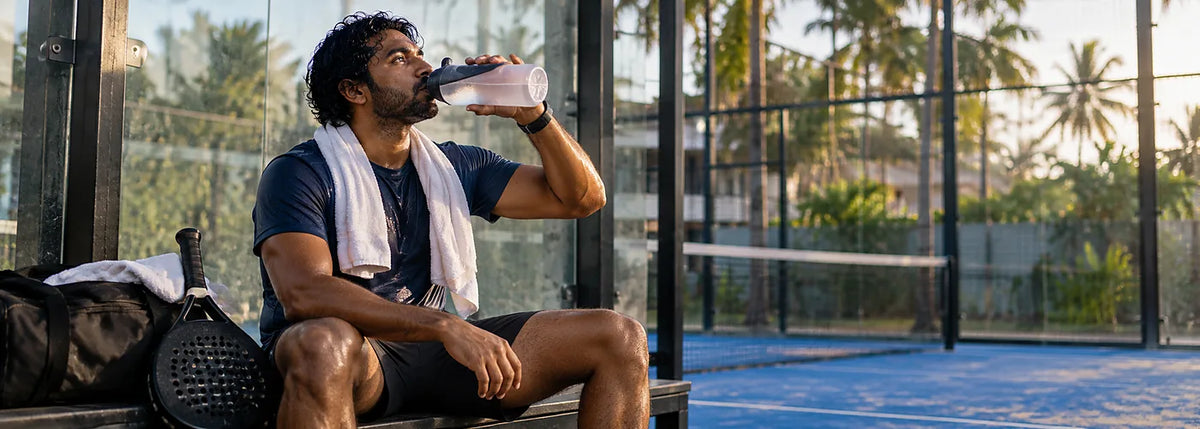
A gel provides carbohydrate; it does not remove the need to drink. In long sweaty sessions, sodium from food or an appropriate drink may be relevant, but forcing large fluid volumes is not a solution either. Check access to water, shade and food at the venue. Our electrolytes explainer covers when plain water may not be the whole story.
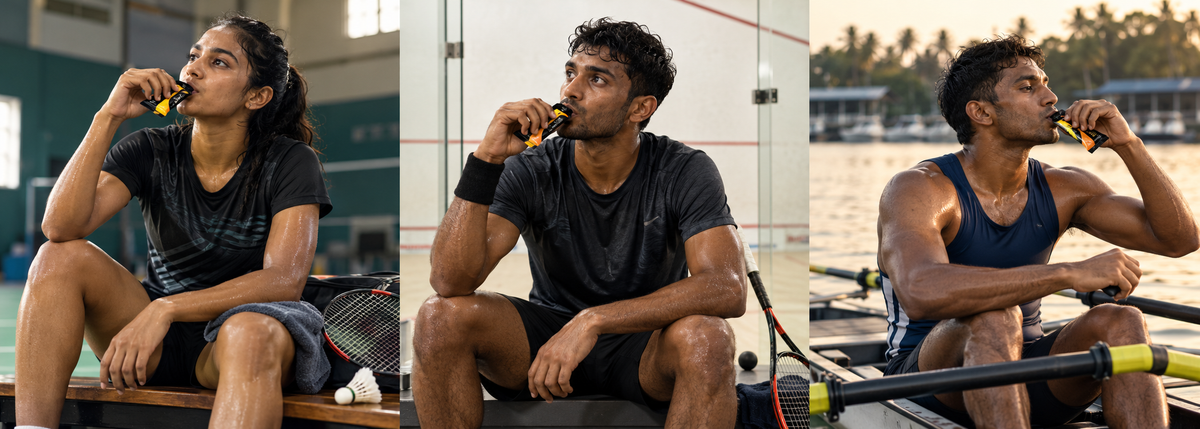
For the other stop-start and endurance contexts, the planned badminton, squash and rowing gel guide focuses on different timing problems. Its link will be public once that hidden article is published.
Match-day FAQs
Do cricketers need gels for a long match?
Not automatically. The day is long, but breaks may allow ordinary meals and snacks. A gel can be a convenience where food access is limited.
Should I take a gel just before rugby?
Prioritise a familiar pre-match meal or snack. If you plan a gel around kick-off or half-time, rehearse it in training.
Does each padel or pickleball game need a gel?
No. Look at total play, meals and time between games rather than taking one by default before each round.
Can a gel replace an electrolyte drink?
No. Its main job is carbohydrate. Plan fluids and sodium separately according to conditions.
Is Beta Fuel always a better tournament choice?
No. Its larger carbohydrate serving only helps if it fits your overall intake and you tolerate it in training.
Fuel the actual match schedule
Start with meals and a workable bottle plan. Keep tested portable carbohydrate for the gaps where it genuinely helps.
Explore SiS GO Isotonic Energy GelsGeneral adult sports nutrition guidance. If you have diabetes or a condition affecting fuelling or hydration, seek individual professional advice. Check current product labels.


Leave a comment
This site is protected by hCaptcha and the hCaptcha Privacy Policy and Terms of Service apply.