





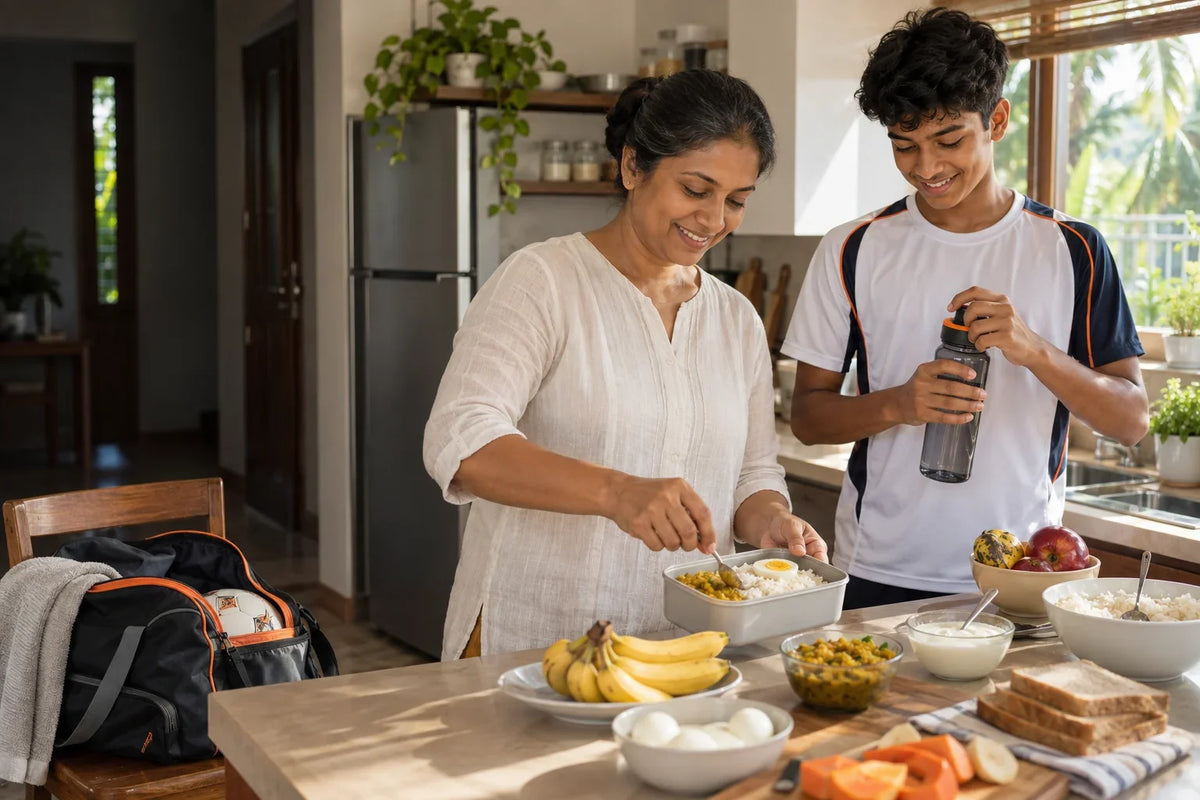
The school bag is packed. Practice starts after lessons. There may be tuition afterwards, and dinner is still hours away. In that schedule, sports nutrition starts with a simple question: when will your child actually have a chance to eat and drink?
This is a practical food-first guide for Sri Lankan school athletes and their families. Use it to organise the day around familiar meals, a packed snack and water access, without copying an adult supplement routine.
Start here: Young athletes need food that supports growth as well as activity. Regular meals, enough variety and a workable school-day routine come before shopping for performance products.
Build around food already on your table
Carbohydrates provide fuel, while protein contributes to muscle growth and repair. A varied diet also supplies the vitamins and minerals children need. Most young athletes can cover their protein needs through balanced meals. Nemours KidsHealth explains these foundations.
The meal examples below are practical options, not a prescribed menu. Choose foods your child likes and tolerates, and adapt them for allergies, religious preferences and your family's budget.
A familiar base
Rice, bread, string hoppers or another usual staple can be part of the plan. There is no requirement to replace family food with imported sports food.
Something alongside
Consider dhal, eggs, fish, chicken, beans or another suitable protein food. Rotate choices instead of making every meal identical.
Variety through the day
Make room for vegetables, fruit and suitable dairy or alternatives. Work with what is available and affordable at home.
A school-to-practice routine you can actually use
This example assumes afternoon practice. Move the steps to match your child's real timetable; it is not a fixed eating schedule for every athlete.
Agree what breakfast will be. Put the packed food and filled bottle beside the school bag so neither is forgotten during the morning rush.
Ask when lunch ends and practice begins. If there is a long gap, arrange a familiar snack such as a banana or bread, with the child's needs and school rules in mind.
Check whether the child is going home or straight to tuition. Arrange a meal or snack they can manage at that point instead of leaving the decision until everyone is tired.
Keep the pre-practice choice familiar
A substantial meal generally works better with time to digest. Closer to activity, a lighter carbohydrate-containing snack may be easier to tolerate. After activity, plan food and fluids rather than repeatedly skipping the next meal. These are general principles; appetite, timing and training demands vary. See the meal-timing guidance.
Try the practical arrangement on an ordinary training day. Can your child open the container easily? Is there somewhere to sit? Do they actually like the food? A carefully planned snack that comes home untouched has not solved the problem.
Water first, with access throughout practice
Water is usually the appropriate everyday drink. Some longer or more demanding sessions may justify a sports drink, which contains carbohydrate and electrolytes. That is different from a caffeinated energy drink. Children and teens should skip energy drinks; caffeine can interfere with sleep and cause other unwanted effects. Read the difference between sports and energy drinks.
Before a school fixture, ask where bottles can be refilled and when drink breaks happen. Write the child's name on the bottle. Agree who carries it between the classroom, bus and ground. Avoid setting one compulsory litre target for every child.
The practical kit for a long school day
Pack the essentials
- A filled, labelled water bottle.
- A familiar snack that fits the timetable.
- A suitable container and utensils.
- A plan for keeping perishable food appropriately chilled.
- Contact details for the responsible adult.
Ask the useful questions
- When can my child eat?
- Is drinking water available?
- What happens if the fixture runs late?
- Who knows about their allergies?
- Is the next stop home or tuition?
Does a school athlete need protein powder?
Not automatically. A supplement should not be the first answer to a missed lunch or a busy timetable. If you are concerned that food intake is inadequate, discuss it with a doctor or dietitian who works with children.
Evidence about long-term supplement safety in teenagers is limited, and products may contain ingredients not obvious from the label. Nemours recommends speaking to a doctor before considering sports supplements. Avoid copying a teammate's creatine, pre-workout or weight-loss routine. Read the guidance on sports supplements for teens.
If someone suggests your child should lose or gain weight for selection, bring that conversation to a qualified professional rather than starting a restrictive diet. Guidance for parents on sport and weight pressure.
A bottle is enough to start
Use a suitable bottle you already own. If you need a replacement, this SNH accessory can be considered for carrying water. Its capacity is not a drinking target, and buying it does not mean adding a supplement.

Quick answers for parents
School practice ekata protein powder one da?+
Not as a routine requirement. Review meals and the school timetable first. If you suspect an intake problem, get individual advice before buying a powder.
Bath kanna puluwan da practice thiyena dawasata?+
Rice can be part of a normal meal. The practical question is the meal's timing and what your child comfortably tolerates before activity. Do not force a large meal immediately before practice.
What if my child comes home with the lunch untouched?+
Ask what happened before changing the menu. They may have had too little time, disliked the food or struggled with the container. Repeated difficulties deserve a conversation with the child, school and an appropriate health professional.
Make tomorrow's practice easier to prepare for
Agree on the meal, pack the snack and check the water plan tonight. Keep adult supplement advice separate from your child's needs.
Educational guidance for parents and caregivers, not an individual meal plan or medical assessment. The linked SNH food article is general reading; adult portions and supplement suggestions should not be applied to children. Health guidance is drawn from the linked Nemours KidsHealth resources. Draft prepared on 14 September 2026.



Leave a comment
This site is protected by hCaptcha and the hCaptcha Privacy Policy and Terms of Service apply.